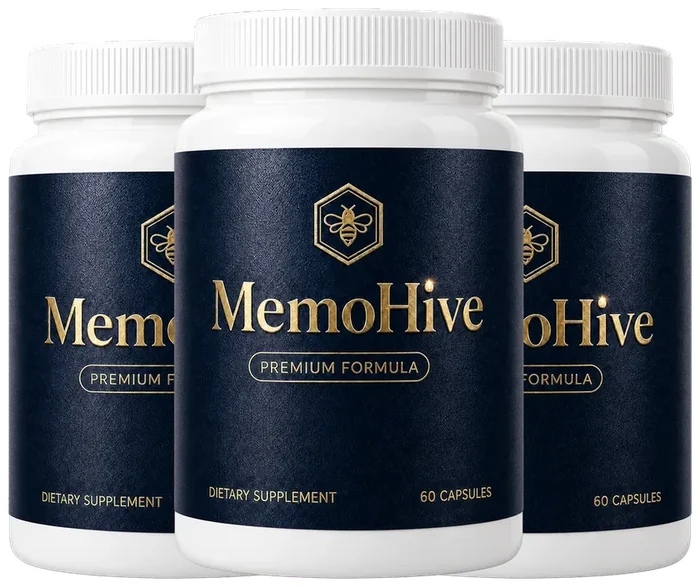
MemoHive ingredients, all five, with the number beside each one.
Five actives, five amounts, and a serving total that reconciles. Here is what each one is, what the research used, and which parts of this panel do not survive the comparison.
Five lines, five numbers, one total
Two capsules is one serving. The seller's panel prints an amount beside every active, and the five amounts add to the serving total the same page states. That is the reason this list is the one reproduced here and the others are not.
| # | Active | Amount | Share | Type |
|---|---|---|---|---|
| 1 | BCAA 2:1:1 Branched-chain amino acids · 540 mg | 540 mg | 52%% | Amino acids |
| 2 | Bacopa Monnieri Whole-plant extract · 200 mg | 200 mg | 19%% | Botanical extract |
| 3 | Rhodiola Rosea Standardised to 3% salidroside · 100 mg | 100 mg | 10%% | Botanical extract |
| 4 | L-Theanine Amino acid from tea · 100 mg | 100 mg | 10%% | Amino acid |
| 5 | Panax Ginseng Root extract · 90 mg | 90 mg | 9%% | Botanical extract |
540 + 200 + 100 + 100 + 90 = 1,030 mg a serving, which is what the panel says. Shares are rounded to the nearest whole per cent.
Why arithmetic is the tiebreaker. Anyone can publish an ingredient list. Very few pages publish one whose own numbers reconcile. When three sources disagree about a product, the one that shows its working and whose working is correct is the one to go with — not the longest list, and not the one with the most impressive-sounding names on it.
Bacopa Monnieri — 200 mg
The ingredient the memory claim actually rests on. An Ayurvedic herb, studied in humans for recall and information retention more thoroughly than anything else on this panel.
BCAA 2:1:1 — 540 mg
Leucine, isoleucine and valine in the ratio used across sports nutrition. It is the largest single item here — more than half the serving by weight.
Rhodiola Rosea — 100 mg, 3% salidroside
An adaptogen from cold climates, studied mainly for mental fatigue and stress-related tiredness rather than for memory as such.
L-Theanine — 100 mg
The amino acid from tea leaves responsible for the calm-but-alert quality people describe when they drink green tea rather than coffee.
Panax Ginseng — 90 mg
Korean ginseng, the most researched of the ginsengs, studied for mental fatigue and working memory in short trials.
The list this page is not using, and why
Another page about this product publishes an entirely different formula — eight ingredients, no amount against any of them:
- Vitamin B Complex
- Magnesium
- Ginkgo Biloba
- Bacopa Monnieri
- Phosphatidylserine
- Gotu Kola
- Green Tea Extract
- Turmeric
Only one name overlaps with the panel above. There is no serving total, no milligram figure and nothing to check, so there is no way to tell whether the list was transcribed, remembered or assembled from what a memory supplement is generally expected to contain. Two of those names — ginkgo and phosphatidylserine — are the usual furniture of a nootropic ingredient list, which is exactly what you would reach for if you were filling in a blank.
We are not asserting that list is invented. We are saying it cannot be checked, the other one can, and that is the entire basis on which this page chose.
Being fair to this panel
It would be easy to read the paragraphs above as a demolition. Three things about this label are genuinely better than the category average:
- Every active has its own amount. In a category where “proprietary cognitive matrix” is standard, five printed numbers is the single most useful thing a label can do, and it is the only reason any of this analysis is possible.
- The arithmetic reconciles. The parts add to the stated whole. That sounds like a low bar until you check a few dozen labels.
- One ingredient is standardised. 3% salidroside on the rhodiola. One out of five is not a sweep, but it is one more than most.
And the honest counterweight: three of the five actives sit below the doses used in the research, and the largest ingredient by weight is the one with the least cognitive evidence behind it. Both of those things are true at the same time, and a page that tells you only one of them is selling.
These statements have not been evaluated by the Food and Drug Administration. This product is not intended to diagnose, treat, cure or prevent any disease. The comparison doses above come from published human studies of single ingredients. None of those studies tested MemoHive.